
Praxisyst Innovations

Systems that translate knowledge into action.

We develop practical Behavioural Development Systems that help people build social and emotional skills for everyday life. Our work combines frameworks, activity-based resources and implementation support for individuals, institutions and communities.

The idea behind our work

Good ideas need systems that work in real life.

Research, policy and strategy create the foundation for change. But their value is realised only when they become practical tools, routines and support that people can use.

Praxisyst Innovations bridges that gap by designing behavioural development solutions for the organisations and communities putting them into action.

More about us

What we create

From insight to implementation

Our work connects the thinking behind an intervention with the resources and evidence needed to deliver it well.

01

Frameworks & methodologies

Evidence-informed structures that turn complex developmental goals into programmes people can put into practice.

02

Tools for delivery

Facilitator guides, participant resources and implementation support that help teams carry the work forward.

03

Evidence & improvement

Monitoring and evaluation approaches that show what is working and where a system can be strengthened.

Explore our services

Our methodology

A disciplined way to build for impact.

Explore the HDSM

The HDSM is our proprietary innovation methodology for turning complex societal challenges into practical implementation systems.

The methodology uses a disciplined 10-step lifecycle to guide design and evaluation. The detailed steps remain private.

Featured framework

SEL National Behavioural Framework

A practical social and emotional learning framework that develops self-awareness, emotional regulation, empathy, relationship skills and responsible decision-making.

From learning to everyday practice

The SEL Behavioural Development Handbooks for Kids & Teens and Youth & Adults bring these skills into classrooms, homes, workplaces and community settings through practical activities and reflection. The framework also includes an approach to implementation and measuring change.

SEL resources

Handbooks and practical resources

Two SEL Behavioural Development Handbooks support learning across different stages of life: Kids & Teens and Youth & Adults. Explore three sample activities from each, or enquire about the full handbooks and licensing.

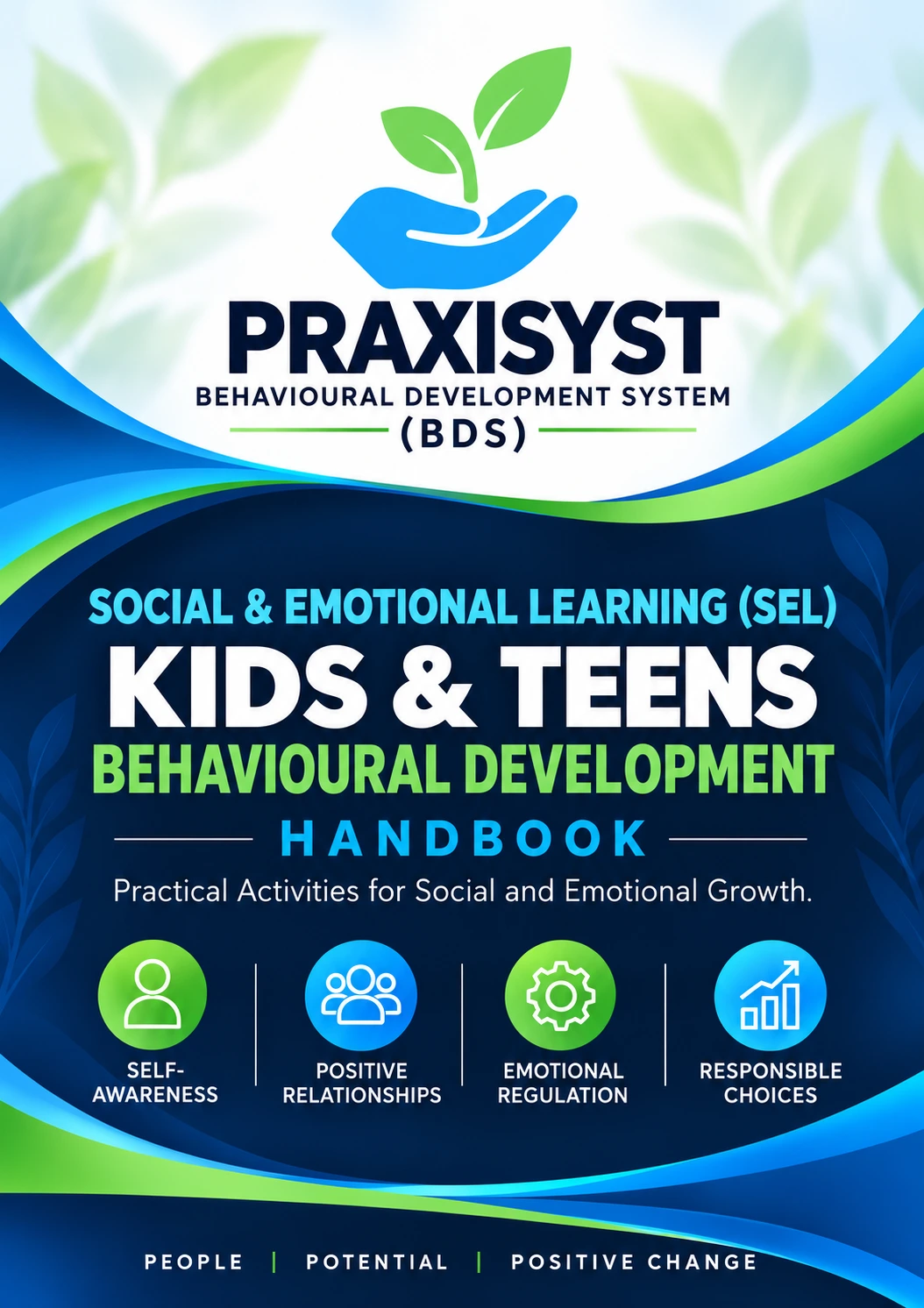
Cover of the Social & Emotional Learning (SEL) Kids & Teens Behavioural Development Handbook

Social & Emotional Learning (SEL) Kids & Teens Behavioural Development Handbook

For:
Kids and teens; teachers, parents, caregivers and facilitators
Purpose:
Practical Activities for Social and Emotional Growth.
Format:
Behavioural development handbook
Availability:
Please enquire about samples and licensing.
Request samples or licensing information

Sample activities

Mirror of MeSelf-awareness · Handbook page 8
  1. Stand in front of a mirror and notice your expressions.
  2. Make three different faces: happy, sad and surprised.
  3. Think about how each face feels inside.

Optional: Draw or colour your different expressions on a blank page.

ReflectionWhich face was easiest to make, and why?

My Strength ShieldSelf-awareness · Handbook page 9
  1. Draw a shield on paper.
  2. Inside, write or draw four of your strengths, such as kindness, creativity, bravery or teamwork.
  3. Decorate your shield with colours and symbols.

Optional: Share your shield with a friend or family member.

ReflectionWhich strength makes you proudest, and why?

Emotion CharadesSelf-awareness · Handbook page 10
  1. Write different emotions, such as happy, angry, scared, excited and worried, on small pieces of paper.
  2. Put them in a bowl.
  3. Take turns acting out the emotions without words while others guess.

Optional: Draw one of the emotions after the game.

ReflectionWhich emotion was hardest to act out?
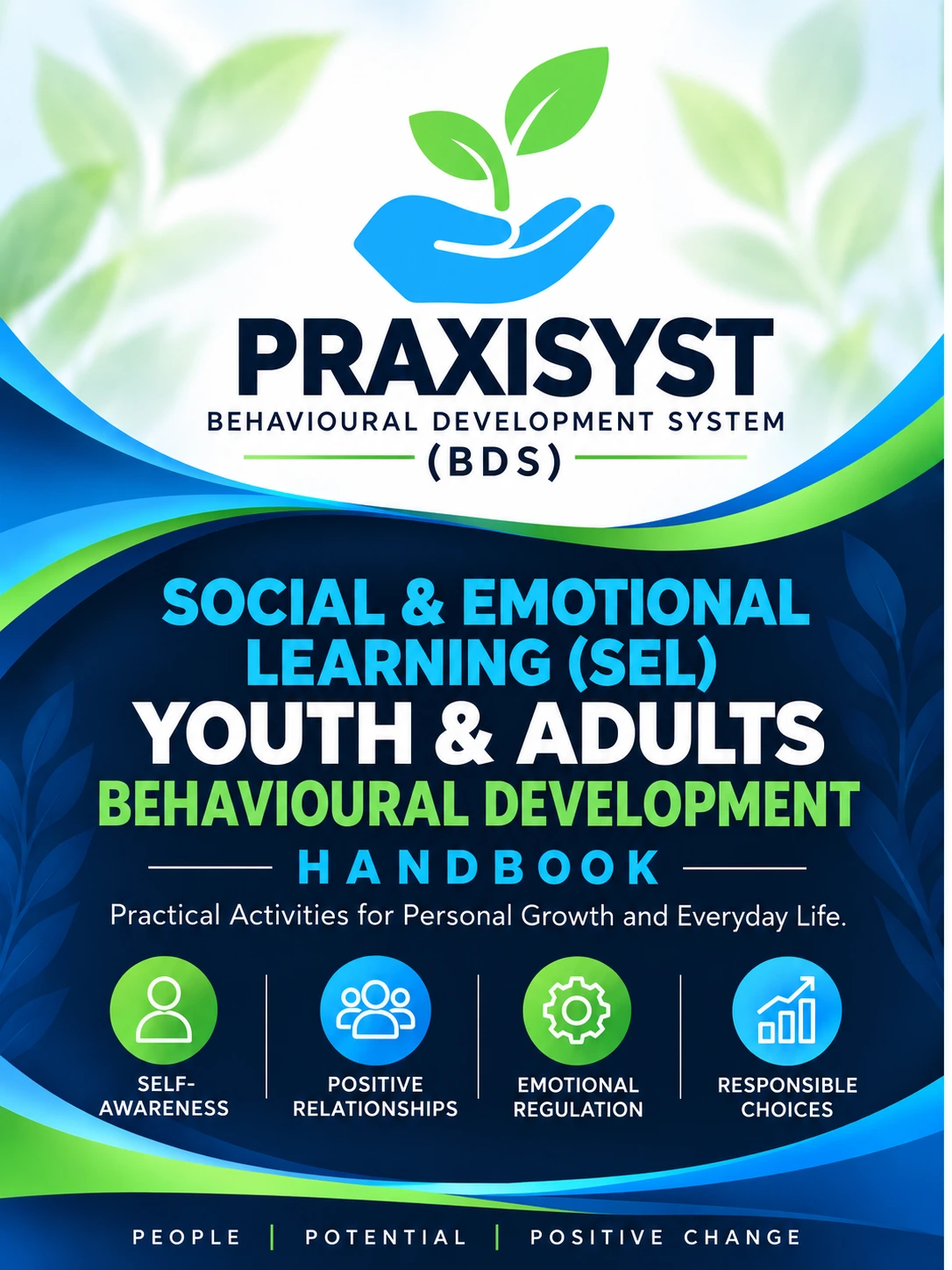
Cover of the Social & Emotional Learning (SEL) Youth & Adults Behavioural Development Handbook

Social & Emotional Learning (SEL) Youth & Adults Behavioural Development Handbook

For:
Youth and adults; teachers, facilitators, mentors and caregivers
Purpose:
Practical Activities for Personal Growth and Everyday Life.
Format:
Behavioural development handbook
Availability:
Please enquire about samples and licensing.
Request samples or licensing information

Sample activities

Emotion JournalSelf-awareness · Handbook page 8
  1. Keep a daily journal for one week.
  2. Write down two emotions you felt most strongly each day.
  3. Note what triggered them and how you responded.

Optional: Use symbols, colours or drawings to represent your emotions.

ReflectionWhat patterns did you notice about your feelings?

Personal Values MapValues awareness · Handbook page 14
  1. Write down ten things most important to you, such as family, honesty or growth.
  2. Narrow them down to your top three values.
  3. Write why these three are most important.

Optional: Create a visual map with symbols for each value.

ReflectionDo your daily actions reflect your top values?

Stop–Think–ActImpulse control · Handbook page 29
  1. Think of a recent situation where you reacted quickly.
  2. Replay it in your mind using STOP → THINK → ACT.
  3. Practise the steps with a new scenario.

Optional: Draw a traffic light: red for stop, yellow for think and green for act.

ReflectionHow different would your outcome have been with this method?

Select activities to suit each participant’s needs and comfort. Younger learners may need support. Reflection can remain private; nobody should be pressured to share personal experiences. These educational resources do not replace professional or specialist support.

Explore the delivery tools

Working together

Designed for the people who deliver change.

We seek to partner with government, educational institutions, research organisations, civil society and businesses to develop and assess systems suited to their context. Whether the need is a framework, delivery resources or support for a team, the goal is useful work that can be sustained.